Jason is the compost king
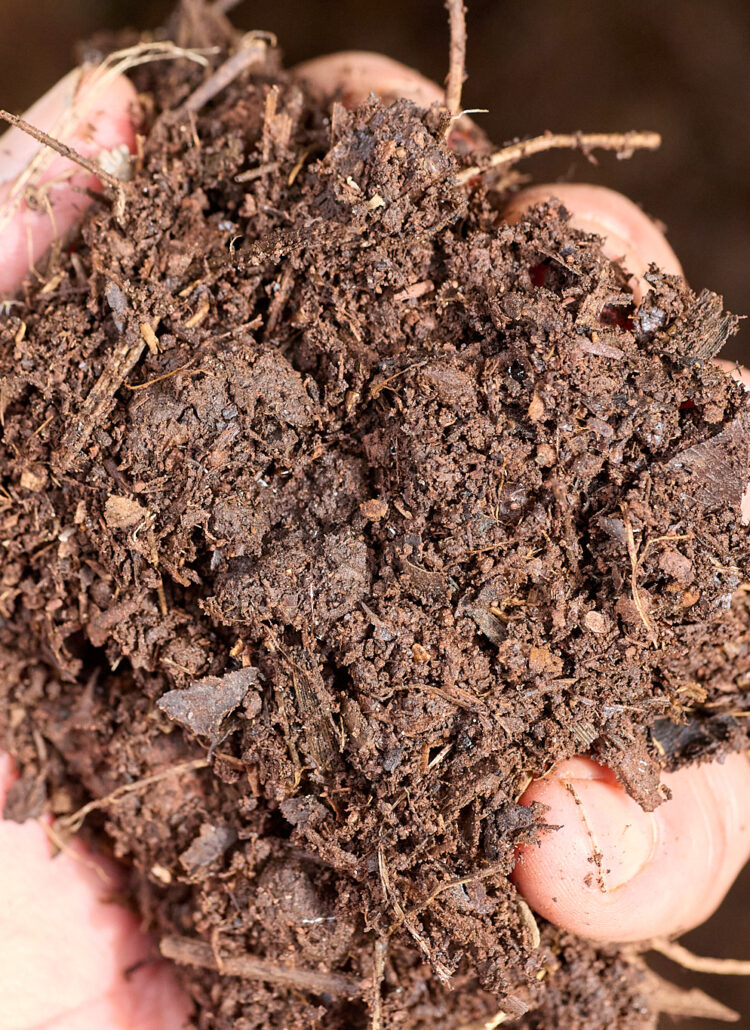
There is one thing Jason is super proud of on the farm, his compost. And he has every right to be proud, after doing some soil tests, his compost tests perfectly for all elements. N P and K. Here are a few words he wrote about the process of creating it. We hope it inspires you to try your hand at making some of your own.
Some basic compost making advice
This is compost that I’ve made here on the farm.
Compost making is simple. First we take all of our green material (high nitrogen things like green leaves, coffee grounds, food waste, etc.) and brown material (high carbon stuff like dead leaves, etc.) and mix it at about a 50/50 ratio. You can add to it and leave it to sit and inactively decompose, turning it maybe once a month. This will make the process take longer. Alternatively you can add to and turn the pile at least weekly. This will speed up the process dramatically. It might seem to take forever to make, but you know when it’s done by the smell, rich color.
Making compost is my thing on our little farmstead. We’ve found that commercial compost cost a lot of money, and it’s not always great. We’ve had some that was so dry that it was hydrophobic. Another batch just didn’t seem to produce very well and was short on nitrogen. This is free (except for the labor) and it has out performed all of the commercial stuff we have purchased.
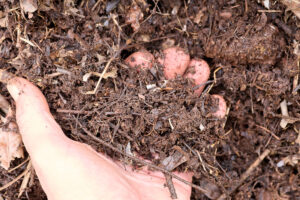
I ended up with a pile that I did that was compost (that whole 50/50 mix thing) and I mixed it with some aged cow manure that we got for free. This pile is also coming along nicely and I suspect it is rich in nitrogen.
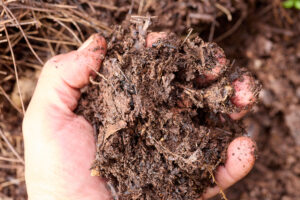
Our property is a small pecan farm, with around 180 trees. The previous owner also planted so many other trees that we are buried in leaves in the fall. I’ve taken just brown leaves and mixed with aged manure to see what will happen. It is also coming along nicely.
Leaf mold will be our workhorse
But, what I’m really excited about is leaf mold.
This is just leaves left to rot on their own. You can see the fungi growing on these leaves now.
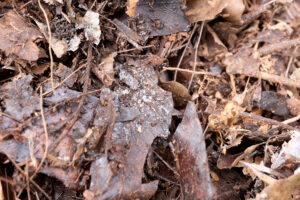
This is how nature does it. The molds and fungi break down the leaves and build soil life. This will become one of the best natural soil conditioners we could ever have on the farm. It helps amend heavy clay soil (basically the only soil we have on the farm), by making it airy and crumbly. Alternatively if you have sandy soil, it will help it retain moisture. We have three hectares of relatively useless clay soil that is in desperate need of help. We are happy to say this will begin the process of building the soil we need.
It is not a quick process by any means. It will take 1-2 years to develop, but over time, the leaf mold will look like compost. We have about 6 more months before ours might be ready to plant in.
You can see it starting to break down here, but it’s still mostly leaves.
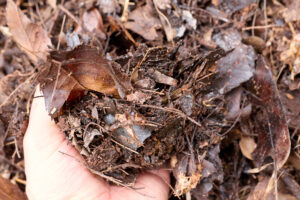
The best part, the rotting leaves brings earthworms—I don’t know where they come from, but they come. Dig around in this stuff, and you will find a ton of them. They also breakdown the leaves and the worm poop is great for plants.
No excuses, make your own
Leaf mold may be a little harder to make unless you have space, but compost is easy. Just keep the mix to 50/50. You can’t just throw in food waste from the kitchen and think it will turn to compost. It needs the brown material (carbon).
If you have a small space and can’t get enough brown, consider using a bokashi bucket. This link takes you to the product I use here in South Africa, but I’m sure there are others in the world. Bokashi bran keeps it from smelling and gets the compost process working.
I use bokashi to take care of food waste, and once my 5 gallon bucket is full, I let it sit for two weeks before burying it in one of my compost piles. This always gives it a boost and keeps the smells down. So if you are just doing small batches in your home, follow bokashi’s simple instructions.
No matter how much space you have, you can certainly start composting. Save the landfills from waste and grow something tasty…
If you want to try some of the unique veggies that we grow here on the farm in our market garden, check out our farm box subscription